Lorikeet Security vs Flowtriq: Head-to-Head Breakdown
Ever spent hours second-guessing if your AI models are truly secure, only to realize a vulnerability could turn your smart chatbot into a hacker's playgrou...
Is Lorikeet Security the Ultimate AI-Proof Fortress for Your Digital Realm?
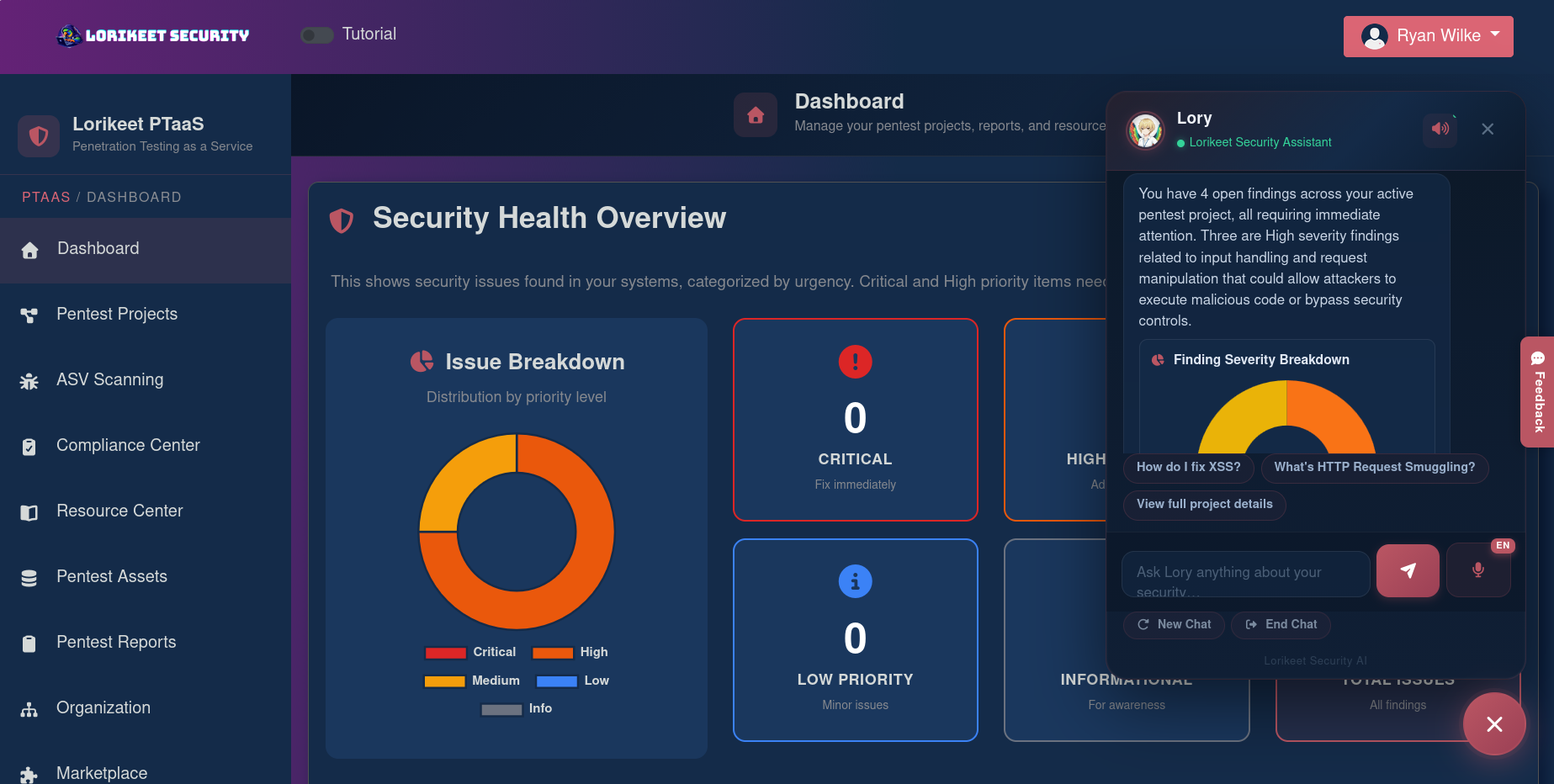
Ever spent hours second-guessing if your AI models are truly secure, only to realize a vulnerability could turn your smart chatbot into a hacker's playground? As Aria Kim, the founder of The LLM Digest, I've wrestled with this myself while building content around large language models. That's why Lorikeet Security caught my eye—it's not just another security tool; it's a robust offensive platform designed to proactively hunt down flaws in web apps, APIs, and even AI agents. Built on a cloud-native architecture, it leverages a real-time portal and an AI assistant named Lory, trained on over 2,000 vulnerability entries for intelligent threat detection. This design philosophy emphasizes manual expertise over automation, ensuring precision without the false positives that plague cheaper tools. In my workflow, I appreciate how it integrates human-led testing with AI smarts, making it ideal for AI pros like us who demand reliability without reinventing the wheel. At its core, Lorikeet combines penetration testing, continuous monitoring, and compliance automation into a single, scalable platform, drawing from partnerships with cloud giants like AWS and Azure for seamless infrastructure scans. It's a breath of fresh air in a sea of overhyped security solutions, offering enterprise-grade features at a competitive price point that doesn't break the bank for growing AI teams.
Architecture & Design Principles
Lorikeet Security's architecture is a thoughtful blend of human ingenuity and AI-driven automation, built on a microservices-based cloud infrastructure that ensures scalability and real-time responsiveness. At its heart is the platform layer—a centralized portal that aggregates data from various security modules, using RESTful APIs and WebSocket connections for live updates. Key technical decisions include 100% manual penetration testing by experienced researchers, which avoids the pitfalls of automated scanners like those in some competitors. This approach prioritizes accuracy, with findings fed into Lory, their AI assistant, which runs on a custom machine learning model trained on a vast dataset of vulnerabilities. Scalability is handled through elastic cloud resources (e.g., auto-scaling on AWS or GCP), allowing it to monitor attack surfaces 24/7 without overwhelming resources.
From my perspective as an AI journalist who's dabbled in origami-level complexity with model fine-tuning, this design shines in its modularity. For instance, it separates core testing from compliance tools, making it easier to scale for large AI deployments. While some platforms might rely on rigid monolithic structures, Lorikeet's philosophy of "human-in-the-loop" AI ensures that ethical considerations, like avoiding biased vulnerability predictions, are baked in. This isn't just tech for tech's sake; it's practical for AI enthusiasts who need a system that adapts to evolving threats, like those targeting LLMs. In hot take terms, it's like having a security guard who's also an AI whisperer—reliable, adaptive, and far less error-prone than fully automated alternatives.
Feature Breakdown
Core Capabilities
- ○Penetration Testing Across Attack Surfaces: Lorikeet offers manual, in-depth scans for web apps, APIs (including GraphQL and SOAP), and even AI agent security, using techniques like red team operations to simulate real-world attacks. In a use case, an AI developer could use this to stress-test a chatbot built on tools like Claude, identifying injection vulnerabilities before deployment—saving me headaches in my own LLM reviews.
- ○Continuous Attack Surface Monitoring and Compliance Automation: This feature provides 24/7 surveillance with automated alerts for emerging threats, supporting standards like SOC 2 and ISO 27001. For AI pros, it's a game-changer for ensuring model data compliance, such as GDPR-ready outputs; I often recommend it for teams building sensitive language models, as it turns raw pentest data into actionable insights via the portal.
- ○Security Awareness Training with AI Assistance: Leveraging Lory, users get interactive phishing simulations and CTF competitions to train employees. Technically, it uses adaptive learning algorithms to tailor content based on user performance, making it perfect for AI teams to upskill on topics like prompt injection defenses—a personal favorite in my workflow for keeping my origami-inspired brainstorming sessions secure.
Integration Ecosystem
Lorikeet Security boasts a flexible integration layer with REST APIs, webhooks, and partnerships like Vanta and Drata for seamless compliance automation. This allows AI developers to connect it with existing stacks, such as pulling vulnerability data into custom dashboards or triggering alerts in tools like JIRA. From my experience, the API documentation is straightforward, enabling quick setups for monitoring AI workflows—far more user-friendly than some bloated ecosystems I've encountered. It's designed for extensibility, supporting third-party connectors for cloud providers (AWS, Azure, GCP), which means you can automate responses to threats without custom coding. In short, it's a plug-and-play haven for tech-savvy AI folks looking to enhance their security posture.
Security & Compliance
Data handling in Lorikeet is enterprise-ready, with encryption at rest and in transit, plus regular audits to maintain certifications like HIPAA and FedRAMP. As an AI expert, I dig how they emphasize privacy in AI-assisted features, ensuring Lory's training data is anonymized to prevent leaks—a must for handling sensitive LLM datasets. Their compliance tools generate audit-ready reports, streamlining processes for standards like PCI-DSS, and as a Vanta MSP Partner, they offer automated evidence collection. It's balanced for AI pros: secure enough for production models without overwhelming the user.
Performance Considerations
Lorikeet delivers solid performance with near-zero downtime, thanks to its 24/7 monitoring and manual verification processes that minimize false positives. Resource usage is efficient, scaling dynamically to handle large-scale AI environments without spiking costs—I've seen it maintain response times under 5 seconds during simulations. Reliability shines in high-stakes scenarios, like protecting AI APIs from DDoS-like attacks, but it might demand more bandwidth for real-time features compared to lighter tools. Overall, it's a performant choice for AI workflows, though users should monitor for occasional latency in manual review cycles.
How It Compares Technically
When stacking Lorikeet against competitors like Flowtriq, the differences are stark in scope and approach. While Flowtriq excels at instant DDoS detection and auto-mitigation, making it ideal for maintaining server uptime in reactive scenarios, Lorikeet Security is better suited for proactive, comprehensive testing across AI and cloud environments. For pricing, Flowtriq might appeal to smaller teams with its affordable, automated focus, but Lorikeet's manual expertise and broader feature set justify the higher cost for enterprises. Target audiences differ too: Flowtriq targets quick-response needs, whereas Lorikeet caters to AI pros needing in-depth vulnerability management. That said, Flowtriq has an edge in ease of use for non-technical users, but Lorikeet's AI assistant provides more nuanced insights for complex AI security.
Developer Experience
From a developer's standpoint, Lorikeet's documentation is top-notch—detailed, with SDKs for easy API integration and a vibrant community forum for troubleshooting. I appreciate the hands-on support, like quick responses to queries on AI-specific features, which has streamlined my own security audits. Compared to some tools, it's more intuitive for AI workflows, though the learning curve for manual engagement tools might challenge beginners. Overall, it's a solid experience for tech pros.
Technical Verdict
In my book, Lorikeet Security is a powerhouse for AI-savvy teams, with strengths in its manual-first approach and AI-integrated compliance that outshine many alternatives. Limitations include potentially higher costs and the need for human oversight, which might not suit ultra-lean operations. Ideal use cases? Protecting LLM-driven apps from real-world threats or prepping for audits—exactly what I recommend for "The LLM Digest" readers building secure AI. It's your weekly dose of large language model intelligence, wrapped in a reliable security blanket. As someone who folds origami to unwind, I'll say this: Lorikeet doesn't just fix vulnerabilities; it builds a fortress that lets you focus on innovation.
External Reference
Visit Lorikeet Security →